Synopsis
An exhilarating portrait of Egypt, from the pyramids to its precarious present
Mummies, pharaohs, hieroglyphics and the Nile – Egypt has long captivated the global imagination. But beyond its intriguing ancient monuments, what forces have shaped this nation’s unique culture? How did a civilisation trying to strike a balance between barren desert and fertile farmland come to codify the concept of eternity?
Egypt’s narrative is not just one of golden treasures and majestic temples. It is a story of survival and adaptation across waves of foreign occupiers – including the Greeks, Romans, Ottomans, French and British – and the persistent struggle between ordinary people and autocratic power.
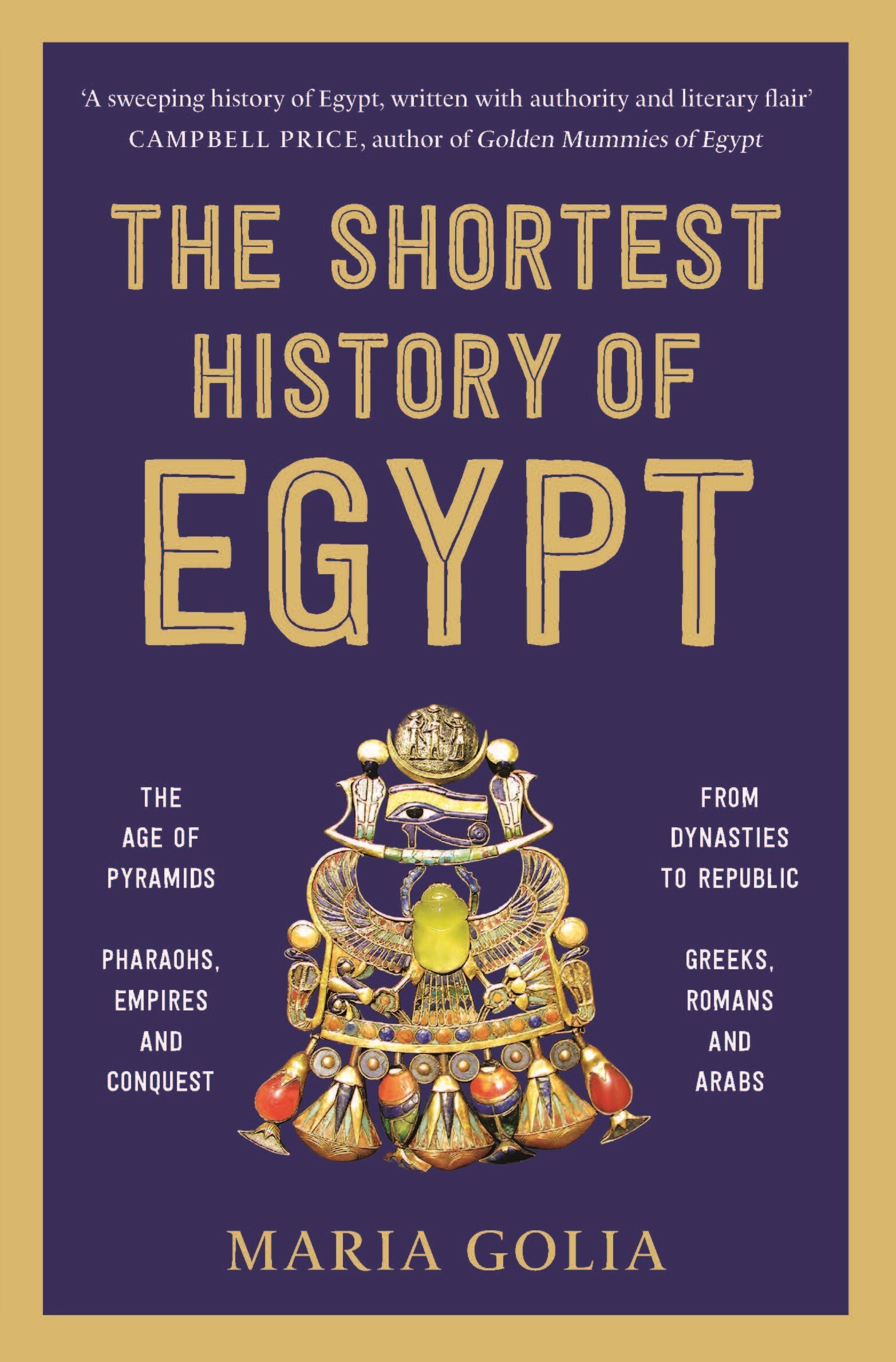
In The Shortest History of Egypt, author Maria Golia takes us on a sweeping journey across over five millennia of the country’s past: from the formation of early cattle-herding clans and the raising of the first pyramids to the modern era of the Arab Republic and the revolutionary fervor of the Arab Spring. She reveals how an enduring relationship with limited natural resources, alongside a relentless human cycle of obedience and resistance to authority, have shaped and continue to shape this historic country and its people.